Tuesday, January 14, 2014

Una Perspectiva desde Afuera - Tochan: Nuestra Casa

     Aquí comparto una publicación del blog de mi amiga y compañera del programa YAGM de la iglesia luterana, Rachel Birkedal  (si, otra Rachel/Raquel).  Ella nos visitó aquí en Tochan hace unas semanas para conocer a mis amigos - los migrantes, y para ver cómo es un día el la vida de un Tochanero.  Aquí ella escribió de su experiencia con nosotros, y creo que ella puede dar otro vistazo en lo que yo experimento cada día.  ¡Entonces, léelo, disfrútalo, y, si quieres, compártelo!
-------------------------
For English, click here.

     Durante las vacaciones de la navidad, tuve la oportunidad de pasar tiempo en La Ciudad de México con algunas de mis compañeras (en inglés nos llamamos YAGMs por el nombre de nuestro programa) y a visitar sus sitios de trabajo. El jueves fui con Rachel (¡no te confundes, es mi tocaya!) a Tochan, un albergue para migrantes. La mayoría de los migrantes, gente en movimiento, en Tochan vienen de los países Centro Americanos. Tochan tiene como objetivo proporcionar un lugar seguro para quedarse a vivir juntos en comunidad, mientras que los migrantes averiguan próximos pasos de sus objetivos. La palabra "tochan" es náhuatl de "nuestra casa", que es lo que el albergue tiene como objetivo ser, al menos temporalmente, para la gente. En mis conversaciones con Rachel, ella me platica frecuentemente de la gente que la bendicen en su trabajo. No pude dejar pasar la oportunidad a conocer esa gente.
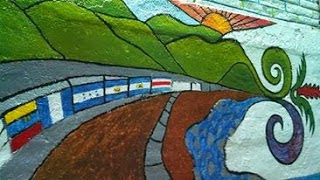
En una pared dentro de Tochan encontrarás este mural que es un proyecto colaborativo entre los voluntarios y los tochaneros. El diseño viene de las descripciones de los tochaneros de cómo se ve el viaje. Lleva las banderas de cada país que ha tenido Tochan. La paloma que empieza el camino (no se puede ver) es el símbolo de Tochan.
     Acabamos subiendo las escaleras (¡siento como siempre estoy sin aliento en los caminos con Rachel!) y entrando en Tochan, nos saludaron todos en la cocina y el salón con un apretón de manos, beso, abrazo, ¨mucho gusto¨, y ¨Ella es Raquel también¨? Cuando entramos en la cocina nos ofrecieron dos platos de desayuno (sardinas y frijoles) y el café estaba lista. Comimos y nos sentamos en el salón. Luego nos invitaron a viajar con un grupo a uno de los parques más grandes de la ciudad de México y al zoológico gratis adentro. Viajando en el metro con estos hombres hispanos en vez de mi grupo normal de extranjeros (los YAGMs) me hizo sentir más cómoda y pertenecida… aunque se pudo escuchar bien al acento hondureño mientras hablamos y bromeamos fuerte en manera que nos dio fácilmente como extranjeros.

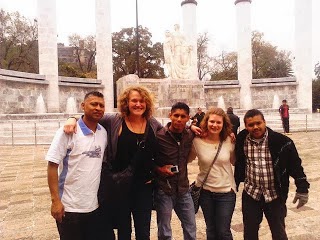
Parte de nuestro grupo de excursión.
     Cuando llegamos al zoológico, fue obvio que nunca se escapa la etapa de la adolescencia. Estos hombres que tienen 24 a 45 años, estaban corriendo por el zoológico tomando fotos de animales extraños, bromeando, subiendo las rocas, cantando canciones de “El Rey Leon” para cada animal que encontramos y pasando bien el tiempo.

¡Me di vuelta, y ellos estaban así!
Ellos encontraron otra manera de ver los gorilas.
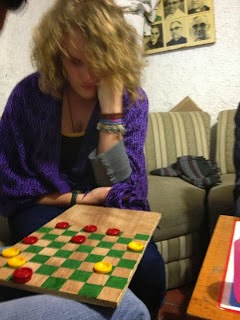
     Más tarde cuando regresamos al albergue nos ofrecieron la comida que había preparada por otros residentes. Esa vez era caldo de pollo…. Perfecto para un día frío y lluvioso. En la tarde, Rachel se perdió en damas (¡varias veces!) y ella comenzó a quejarse que las reglas suyas no son los mismos de las reglas de ella (¡y es verdad! ¡No jugamos lo mismo!). Pero finalmente ella ganó contra el mejor jugador de la casa. “¡No puede ser!” él gritó. Después de damas jugamos “Mundo turismo” que es una versión “mundial” de Monopolio… no les tengo que decir… lo perdí... Al terminar el juego fue tiempo para regresarnos a la casa de Rachel. Es un viaje de una hora a una hora y media. Empezamos a despedirnos de todos y nos tiritamos en el camino al autobús (Hacía muchísimo frío).

Rachel perdiendo su juego de damas.
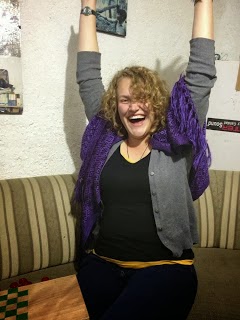
Raquel se ganó. ¡No puede ser!
     Fue un día divertido y con mucha actividad. Practiqué mi habilidad de escuchar al acento centro americano y jugar juegos de mi niñez. Estar en la casa con los 14 residentes y varios voluntarios me hizo sentir de vacaciones con mi familia. Pero con todo la diversión y la risa pudiera ser fácil y una vergüenza a olvidar las historias de esta gente, historias que le hizo a Rachel llorar en el camino a la casa mientras practicábamos. Historias de daño, violencia, miedo, pero también de fuerza y valor. Historias de:
  • Hombres que no salen de Tochan por miedo de las pandillas que los atacaron en el camino… Sin embargo, los mismos me permitieron a compartir en su valentía cuando se fueron de la casa por la primera vez y a visitar el zoológico.
  • Un joven que fue secuestrado, casi matado y obligado a huir… un incidente que va a cambiar su vida para siempre y obligarlo a declararse en la condición de refugiado aquí en México, aunque hace poco tiempo que estaba como un estudiante de la universidad, contento y despreocupado en Honduras.
  • Los migrantes que salen de sus hogares a viajar en La bestia hacia tierras desconocidas.
    • “La bestia” lleva ese nombre por razón. Es la transportación que muchos toman en su viaje al norte, pero nos es sin algún precio.... Por las historias de sus amigos, Rachel ahora tiene miedo de los ferrocarriles. Historias de brincar de ferrocarriles en movimiento, de ser atacado por pandillas, de perder extremidades, de haber sido golpeado por oficiales. Sí, La bestia tiene razón por llevar ese nombre.
     La gente en su tiempo en la casa Tochan se convirtieron en algunos de los mejores amigos de mi amiga Rachel. Son divertidos, interesantes, chistosos y valientes. Cada uno tienen sus propios intereses, tipo de música, sueños y esperanzas. Pero lo que tienen en común es que son gente en una tierra extranjera. En una manera similar yo he cruzado fronteras estatales y ahora fronteras nacionales, pero a diferencia de mi, huyeron de un hogar que lo aman pero tuvieron que salir. La mayoría sueñen a regresar a su país (no sé cuantas veces escuché “En Honduras…” durante mi visita), pero no pueden por varias razones. Rezan por un día cuando su situación cambie y que puedan regresar a la tierra que los vio crecer.

Esta pintura (por Rachel) está en el salón, 
incluye los sellos de varios países centro americanos.
     Soy bendecida por esa experiencia que me permitió a entender la experiencia de Rachel aquí en México. Como estoy aquí con un grupo de voluntarias de la iglesia luterana, aprendo también de las experiencias de mis compañeros. Agradezco mucho esa oportunidad a visitarla. Rachel es un “Solidarity Sister” o “Una hermana de la solidaridad” en Tochan… es el nombre que le dio nuestra coordinadora Lindsay (¡suena mejor en ingles!). Significa que Rachel ha sido bendecida con la carga de vivir y compartir en los cuentos e historias de los migrantes. Pido que les oren por estos migrantes que están muy lejos de sus tierras amadas y pido que le oren por Rachel mientras lucha con todo lo que está aprendiendo de ellos.

     Si quieres escuchar más de Rachel, da un vistazo a su blog http://racheltheyagm.blogspot.com/

"Mantener estas historias con cuidado. Hay muchas personas que se beneficiarán de las historias que se escuchan durante nuestro tiempo juntos. Imagínese escuchando a otro como lo haría escuchar a la escritura - con atención y abierto a la santa ". - Pacto de Presencia

(publicado con permiso desde el blog de Rachel Birkedal)

Tuesday, December 31, 2013

Contrast

I love darkroom photography.

     In high school I took every possible class and worked for hours in the darkroom by myself, listening to Hijas del Sol and manipulating negatives into positives.  It was amazing work.  My photography teacher was Ms. Wilson (pronounced Wheeeeeel-sin due to her thick southern accent), a short, spunky, red-haired woman who happened to have a rhyme, saying, or song for just about every artistic principle.

     One of Ms. Wheeeeeel-sin's favorite sayings in the darkroom was about getting the proper contrast in our photos.  We used different filters to increase contrast in our prints depending on how much gray-scale was blurring up our photos.  Ms. Wheeeeeel-sin used to always say that filters "take the gray... AWAY!" in the happiest voice imaginable.

So what does this have to do with Mexico?

     If life here were a photo and socioeconomic status was the pigmentation, Ms. Wheeeeeel-sin would be proud of its composition, although potentially concerned by its content.  Socioeconomic gray-scale is minuscule and nearly invisible here.  From the minute I wake up in the morning to the moment I fall asleep at night, I am perpetually confronted by the contrast.  The very extreme contrast.

From the carretera upwards - an interlomas
highrise behind la barranca del negro
     Looking out the window over my dresser, I have a view of the homes along my street - basic concrete and cinder-block homes with roofs topped with colorful laundry hanging out to dry.  Below our homes, further down the valley, I can see the homes become progressively more ramshackle, pieced-together, and fragile.  At the edge of the road at the bottom of the valley I can see the temporary structures assembled by the homeless people who live along the carretera.  There are a couple round concrete tubes where 5 men live, accompanied by a family of black, shaggy street dogs.

     Crossing the road and rising up the other side of the valley, the pattern replicates and reverses itself.  However, in the far distance, above the humble (but colorful!) concrete/cinder-block homes on the other side of the valley, I have a view of the incredibly ritzy high-rise apartments of Interlomas, Santa Fe, and Huixquilucan - three of the wealthiest zones not just in Mexico City, but in the entire country.  The fact that their elite housing complexes loom above the more modest dwellings of my neighborhood is a physical manifestation of a social hierarchy that isn't lost on me.

     And all that before I even get dressed in the morning.

     Leaving my house I'm bombarded yet again with the extreme contrast as I walk by cars along my street that quite obviously haven't moved for decades but above me I can see sparkling white BMWs speeding though my neighborhood on their way to the elite zones around us.  I notice that the advertisements on billboards above our corner stores, our tortillerías, our taco stands, are not geared for us, but rather for those drivers passing through on their way to 'bigger and better' things.  Because I can assure you that no one who lives in El Olivo can afford private aerial dancing classes.

     Then there's public transportation to think about.  The fact that only one bus route connects my isolated, working-class neighborhood to the big city and that the entire trajectory takes between 1 to 2 hours, whereas driving on your own it takes 20 minutes.  If 'time is money' as we're so fond of saying, how much more do people who have to depend on public transportation have to spend simply to get to work?
(A great TED Talk by the former mayor of Bogotá, Colombia explains why this is so important!)

     Speaking of money, there's the issue of actual money spent on transportation.  A one-way ride from El Olivo to the closest metro station is 10 pesos, and a one way ride to the nearest grocery store is 8 pesos.  However, if you take it from just outside of our neighborhood limits, the price drops in half.  So people who live in Huixquilucan proper, Interlomas, etc. pay 5 or 4 pesos, and many people who live in El Olivo end up walking to save that money (which is equal to 31-38 U.S. cents).  When the minimum wage here is 55 pesos per day, $4.21 US dollars, that makes a difference.  It's 9% of your daily income.  (For extra irony, you have to walk to the Proctor and Gamble offices to take the combi for 4 pesos.)

Although the traffick wasn't too heavy at the moment I took
this picture, you can see the periférico hierarchy clearly.
     Once you're in Mexico City proper (also known as DF), there's another physical manifestation of the wealth hierarchy, this time on the street.  Around DF there is a huge circular highway called the periférico that allows people to avoid the highly confusing streets of the biggest city in the world.  The periférico is the central route for almost anyone travelling above ground in Mexico City, and consequently it fills with the heaviest traffic of the entire city.  However, if you can afford it, you can pay to drive on the private road literally right above the free periférico.  So, again, if you're rich you can save time.  And time is money, right?

     Finally, (although nothing is really ever final with these issues, is it?) there is the inevitable fact that the further into the wealthy, ritzy, private zones you go, the whiter and whiter the people get.  I have noticed this as I have made the walk to the grocery store, as I take the bus ride to work, anytime I find myself crossing a border from 'clase popular' to 'clase alta'.  The richer the area, the whiter the general occupants.

     Living in the United States, I saw undeniable economic inequality and similar racial correspondence.  So this post is not, at all, meant to inadvertently say that the United States is somehow perfect, but (going back to the photography metaphor at the beginning of this post) the filter used for this Mexican photo took the contrast up.

     A measurement of economic inequality used by economists called the GINI coefficient.  The number ranks countries on a scale of 0 to 100, with 0 being perfect economic equality - everyone makes the exact same amount of money - and 100 being perfect economic inequality - where the richest person earns all the money.  On this scale, Mexico ranks higher than the United States by 7 points, with 47.16 compared to the US's 40.18.

     Yet, compared to other countries in the Americas, Mexico doesn't look so bad.  Which is saying something.  For example, Honduras, where the majority of the migrants we receive at Tochan come from, is ranked as the 8th most economically unequal country in the world, Colombia is the 11th, El Salvador the 28th, Mexico 34th, and USA 61st.  (For the record, there are 194 countries in the world.)*

A map of world GINI coefficients
Source
     A question I keep coming back to as I encounter all of these extreme economic differences on a daily basis is:  Where do I fit in this?  I am a wealthy, white, U.S. American, living in a working-class, mestizo, Mexican neighborhood, living off 55 pesos a day, working with displaced Central American migrants, many of whom are fleeing even worse economic disparity than they encounter here.  Where do I fit?

     Honestly, I don't know.  And I won't pretend to know.  It can be awkward and uncomfortable at times, especially trying to explain it:

When Tochan doesn't have any money in the office to buy tortillas that day, how can I explain that I actually don't have any extra to loan them even though they've seen photos of my parents' homes and know my socioeconomic background?

When I walk into the mall to get cereal (yes, grocery stores are in malls here), how can I explain that I feel uncomfortable surrounded by white people despite the fact that I am one because I only ever see that many of us when I'm shopping?

There are no easy answers, I suppose.

Just live, lean into the discomfort, learn, and, maybe, fight back.

*I gathered my GINI coefficient statistics from this website.

Tuesday, December 24, 2013

¡Feliz Navidad!

Just a brief post to wish you all, near and far, a very Merry Christmas (or Feliz Navidad, if you prefer).  I am endlessly grateful for the people in my life and everything they have done and continue to do to support me.  You all rock!
I hope this video makes you smile - it's a musical season's greeting from the YAGMéxico crew!
---
Esto es un blog bien breve solo para desearles, cerca y lejos, un Feliz Navidad (o 'Merry Christmas' si lo prefieren).  Estoy infinitamente agradecida por todas las personas en mi vida y por todo que han hecho y que hacen para apoyarme.  ¡Ustedes son lo mejor!
Espero que este video les hace sonreir - es un saludo musical del YAGMéxico grupo!


Friday, December 20, 2013

“La oscuridad se vuelve a luz.” The darkness becomes light.

Disclaimer:  This story also appeared in my Newsletter on Nov. 1st 2013.
If you read that and are reading this, it will be repetitive, but maybe it will speak to you differently this time.  If you haven't read it yet, enjoy!

Pedro, showing off his new hat and shades.

     Pedro is 23 years old, Honduran, a soccer aficionado, and one of my best friends at Tochan.  Every day when I arrive at work, he greets me with his huge smile and an enthusiastic “Buenos días, Raquel!”  Beyond being exceedingly friendly and patient, he has shown me the power of the human spirit.

     On May 5th, 2012, Pedro left Honduras (intending to get to the United States) due to economic difficulty and social violence.  However, Pedro’s Honduran pride is unmistakably evident. He talks about how much he misses the abundant flora and fauna, rivers, oceans and beaches, ancient ruins, the streets of his barrio, his soccer field and school, and, most of all his friends and family.  Pedro told me, and I have come to observe, “Hondurans are chatty, open; they share everything – ideas, life.  We want to make our society better.  I miss that.”

     After leaving his hometown, Pedro crossed the majority of Honduras, paid to enter Guatemala, crossed all of Guatemala in combis (little vans that act as uncomfortable buses), and took a 6-hour boat ride into Mexico where he met up with friends who were also migrating north.  When they got to Tabasco, the group jumped on the freight train known as “La Bestia” – The Beast.  La Bestia is one of the few ways that poor Central Americans can afford to migrate north, by climbing onto and jumping off of the fast-moving cars.

     On May 17th at midnight Pedro attempted to board La Bestia, but slipped, fell, and hit his head, losing consciousness.  When he came to, he tried to stand, but couldn't.  Confused, he reached down his leg and felt blood, and bone.  He had lost his left leg to the tracks.  Thousands of people are mutilated and even die from similar incidents every year.

     Fortunately for Pedro, someone heard him cry out before he passed out again and called the Red Cross, who took him to a hospital where they finalized the amputation.  At first he was in a state of total despair.  Losing his leg at 22 was the last thing he thought might happen to him, and the very last thing he wanted.  Every once in a while he was reminded of things that he would never be able to do again, like when he unpacked his cleats and realized he might never play soccer again.  His physical recovery went quickly, but psychologically it took several months for Pedro to regain his optimism, cheeriness, and faith.


Setting up Tochan's Día de los Muertos ofrenda
and testing out his new prosthesis.
     After leaving the hospital, Pedro was taken to a federal Migration Station where he stayed for a few weeks and petitioned for his Mexican residency.  In April, Pedro came to Tochan, and he is now the resident who has spent the most time with us.  Since his accident, Pedro has become an unlikely beacon of hope in the house.  He often acts as an unofficial counselor to the other residents, offering advice and comfort when they are at their lowest points.

     During one of our many post-lunch coffee conversations, we were talking about his accident and he summarized it by saying, “La oscuridad se vuelve a luz.” – The darkness becomes light.  I can’t think of a better way of describing what has happened to Pedro and how he has handled it.  Although I would never wish him to go through what he has endured, the way he conceptualizes his situation is more than inspiring.   

   “No tengo pierna, pues si tengo pierna porque Dios camina por mí.” – I don’t have a leg, well yes I do have a leg, because God walks for me.


God may walk for Pedro, but I believe that God walks in Pedro as well.

Source

*Update:  Pedro has now left Tochan and been able to start renting his own place - right next door!

Thursday, December 19, 2013

Just do it

     You might have noticed that I haven’t written a blog post since September 16th, 2013.  I sincerely apologize for that 3-month-long gap in my communication.  These few months that I have been in Mexico have simultaneously been some of the most difficult, rewarding, challenging, uplifting, depressing, fun, informative, and, clearly, overwhelming times in my life.

     Though I would love to tell you that I took an intentional 3-month hiatus to prepare to communicate what I am experiencing, that would be far from the truth.  Truth is, I have started over seven different blog posts only to become confused, frustrated, and extremely emotional and give up after a few sentences.

The view of Huixquilucan slums and suburbs
from my window.
How do I talk about my friend who would give anything to give his mom a hug for Christmas, but can’t go back because the gang that controls his neighborhood has a price on his head, without crying?
I can’t.

How can I share the lessons I'm learning about living out faith on a daily basis from my very religious family here, without seeming overly idealistic?
I can't.

How do I tell you about my friend who was denied refugee status because his fear of being kidnapped and tortured (again) then executed (like the four people who didn't escape with him the first time) is deemed “subjective” in the eyes of the law, without being infuriated?
I can’t.

How do I describe the extreme socioeconomic disparity that confronts me as soon as I look out my window in the morning and see the elite high-rise apartment complexes towering above the rubble that lines my valley, without getting conflicted about my role as a wealthy white U.S. American living in a working class mestizo Mexican community?
I can’t.

     How, how, how, do I write these stories?  That how has been keeping me from sharing what I see, hear, feel, learn, and wonder.  Now, however, I finally have come to a realization that is compelling me to write.  It doesn't really matter all that much HOW I tell these stories.  It matters THAT I tell them.

     T.S. Eliot writes, “Go, go, go said the bird.  Humankind cannot bear very much reality.”  But here is reality, daily shoving its hard truths, beautiful glimpses of this world’s potential, and their piercing contrast right into my face all day every day.  I cannot “Go, go, go” anymore.  Running away is not an option.  Though reality is indeed hard to bear, we have to.

So, how do I tell these stories?  The way I experience them.

Are you ready for some of this reality?  Because here it comes, ready or not.

Just do it.

Skyline view from the General Hospital in Mexico City

Monday, September 16, 2013

Dependence

Here we are: 4 weeks into the program,
3 weeks into Mexico,
and 1 week into living on my own here.

     Although, really, I am not by any means “on my own” in this place.  If I were actually on my own I would not have made it this far; that is for certain.  If it hadn't been for all the people giving me directions, correcting my Spanish, having the patience to endure my pantomiming, double-checking that I understood everything from the staff meeting, and giving me the opportunity to express myself, (not to mention the people sustaining me from home!) I would be completely lost, literally and figuratively.

     My time in Mexico has been characterized with me coming to terms with my profound dependence on other people.  In the States, I am usually a very capable person.  I can navigate my way through a variety of places and situations.  I know how to act at a store, a dinner, or a workplace.  I know the implications of a hug, the connotations of a word, how to make a joke.  Here, everything is new. And I need major help figuring it all out.

     As I've mentioned several times, the ELCA's model of mission is that of Accompaniment: “Walking together in solidarity, characterized by mutuality and interdependence.”

Celebrating Mexico & Central America's independence at
Tochan with some of the people I have depended upon.

     Until we come to terms with our dependence on others, we will never be able to appreciate or intentionally practice “interdependence.”  If we fail to recognize that we are dependent on others for many of the various things that keep us going – from food to family – we will ultimately fall into the trap of thinking of our relationships as a hierarchy, with ourselves at the top.  We will make the mistake of thinking that we are here to save others, that we have all the resources, answers, and validity, that we are independent and that those we accompany are at our loving mercy.


     What I've seen, done, and experienced would in no way be possible without:
My amazing host mothers who feed me, house me, and show me unrestrained love,
Their nephews who gave me an extensive tour of our colonia, complete with tips and tricks,
My co-volunteers at Tochan who explain the shelter's programs and purposes to me (and who occasionally translate key phrases in our meetings),
My fellow YAGMexico participants who check in on me and comparten mi pena,
The men currently at Tochan who cook our meals and break up the boredom of office organization with conversation,
The strangers who offer unsolicited random acts of kindness,
and everyone else who has been a part of my survival and growth.

     They have shown me what Ephesians 4:2 means: "Always be humble and gentle. Be patient with each other, making allowance for each other's faults because of your love."  Someday my time will come to reciprocate, and I have been learning profound lessons on how to do so.

Sunday, September 8, 2013

In My End is My Beginning


     Today marks the end of all our YAGM orientation – Chicago, and in-country – and the beginning of our actual, non-preparatory lives here in México. As we were talking this morning, the YAGMéxico group discussed how much this day felt like an end, rather than a beginning. We have spent the last three and a half weeks together, growing, learning, and sharing life. We have practiced accompaniment and vulnerability in ways that we never had before, building a solid crew to support each other throughout the challenges and joys of this year. To leave each other and go our separate ways feels like the end of something profound.

     These last few weeks we have also developed connections to local communities that have held us together in our place of vulnerability – being in a new country, culture, and people with the knowledge that they will become integral parts of our lives. We spent one week living with families in Tepoztlán, Morelos, Mexico as we also took language classes to improve our Spanish abilities. Tepoztlán is a beautiful town with entirely cobblestone streets and upwards of 135 fiestas every year. Our family was incredibly welcoming, which often manifested itself by our mom feeding us enough food to feed a small family each. It was an intense week spent with beautiful people.

Sign for the Guadalupanas
     This last week we spent in a convent of Guadalupanas, Catholic nuns who follow the teachings of La Virgen de Guadalupe. They are pretty radical and practice incredible hospitality. Most all of them have masters or doctorates in theology and they talk about La Virgen de Guadalupe and Christianity in the most liberating way. From Hermana Fabiola, who perpetually captivates the table with knowledge of Mexican politics, society, and history, to Hermana Margarita, who always greets us with a heart-melting smile and jumps at every opportunity to practice her few English phrases, the Hermanas have taught us invaluable lessons about life, faith, passion, and hope. I’m only beginning to process the things I’ve learned from the Guadalupanas, and I’ll no doubt continue to draw upon those lessons throughout this year.

     So as we talked this morning about all of the things that are coming to a close, I was reminded of another part of TS Eliot’s Four Quartets (this poem will come up often in this blog – be prepared!):

Home is where one starts from. As we grow older
The world becomes stranger, the pattern more complicated
Of dead and living. Not the intense moment
Isolated, with no before and after,
But a lifetime burning in every moment
And not the lifetime of one man only
But of old stones that cannot be deciphered.
There is a time for the evening under starlight,
A time for the evening under lamplight
(The evening with the photograph album).
Love is most nearly itself
When here and now cease to matter.
Old men ought to be explorers
Here and there does not matter
We must be still and still moving
Into another intensity
For a further union, a deeper communion
Through the dark cold and the empty desolation,
The wave cry, the wind cry, the vast waters
Of the petrel and the porpoise. In my end is my beginning.
(T.S. Eliot, Four Quartets, East Coker, V:190-209)

     As we leave the tight YAGMéxico group and the families and the Guadalupanas, we also go out into our new communities, into new experiences, into new challenges and joys. “In my end is my beginning.” And the people we met, the lessons we’ve learned, the selves we are becoming, are not going to suddenly disappear. We aren’t living “the intense moment/Isolated, with no before and after”, but we will carry those relationships and lessons with us so that there will always be “a lifetime burning in every moment.”

Now the challenge is to “be still and still moving/Into another intensity/For a further union, a deeper communion.”

Challenge accepted.

YAGMéxico
(This was written on Saturday April 8th, but internet access didn’t allow me to post until now.)